Our final day before heading into Scotland proper was spent heading into Scotland for a daytrip..!
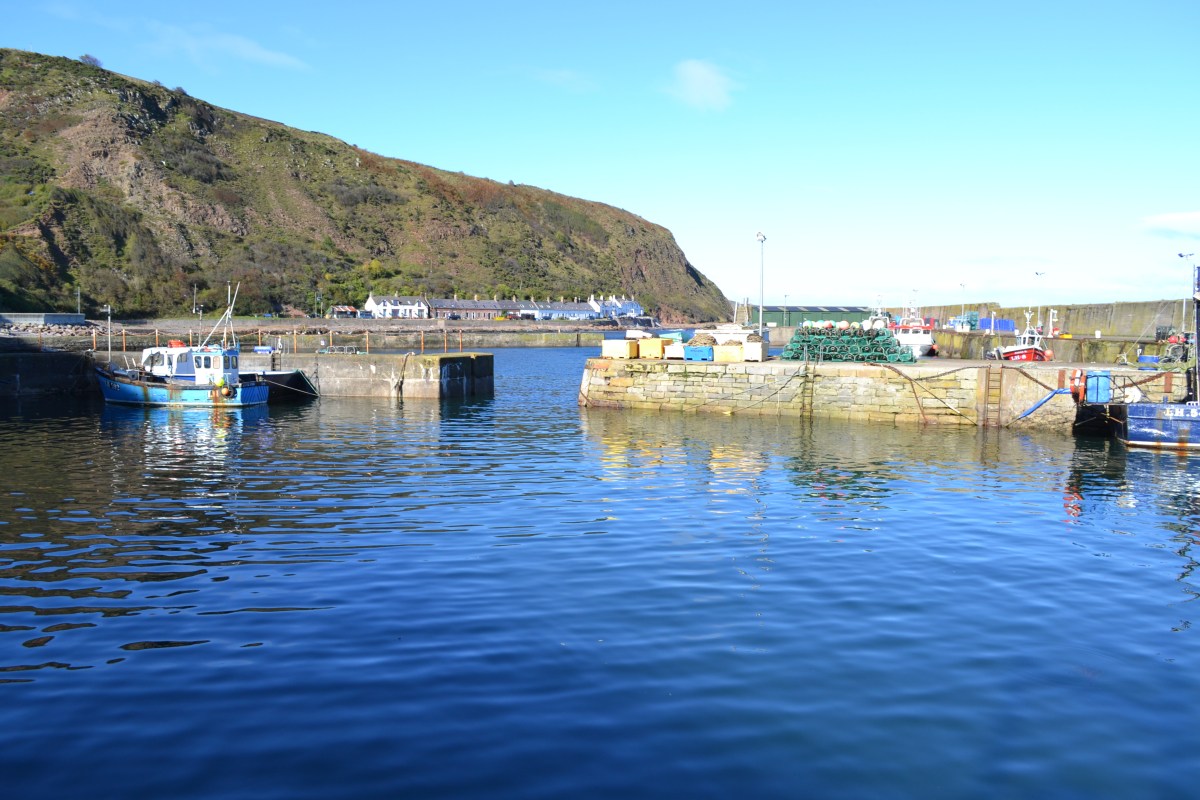
It was a lovely sunny day and the views were spectacular as we hugged the coast and crossed the border, passing the last (first..) pub in England on the way. A short while along the A1 after the border we took a right hand turn onto a minor road and found ourselves turning right again and heading down into the small settlement that is Burnmouth – the 1st village in Scotland.
At the bottom of the steep hill down to the harbour there are in fact 3 separate settlements clustered together – Partanhall (now mainly holiday lets fronting directly onto the water (with only a narrow road between them and the elements), Burnmouth itself with it’s harbour and a number of dwellings (some of which feature a fishing store on the lower floor – with a front door seemingly too big for a normal door, but too small for a garage) and finally Cowdrait at the southern end with a handful of cottages. The 3 parts together make up a tiny village, but Burnmouth does extend back up the steep cliff road to encompass a church and old schoolhouse as well.
The harbour is very pretty with swans enjoying the sunshine and the view out to sea was lovely.
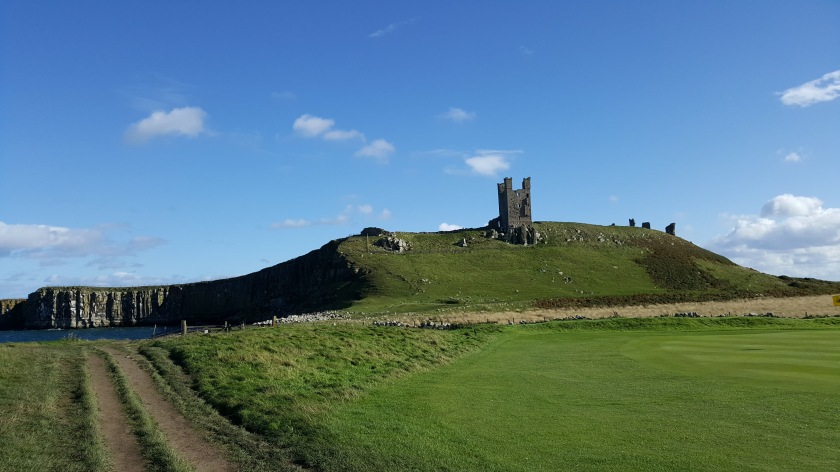
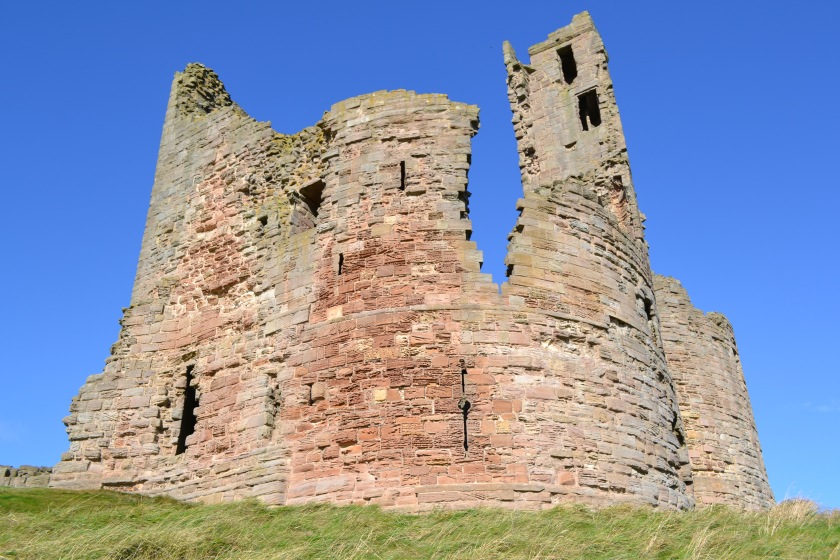
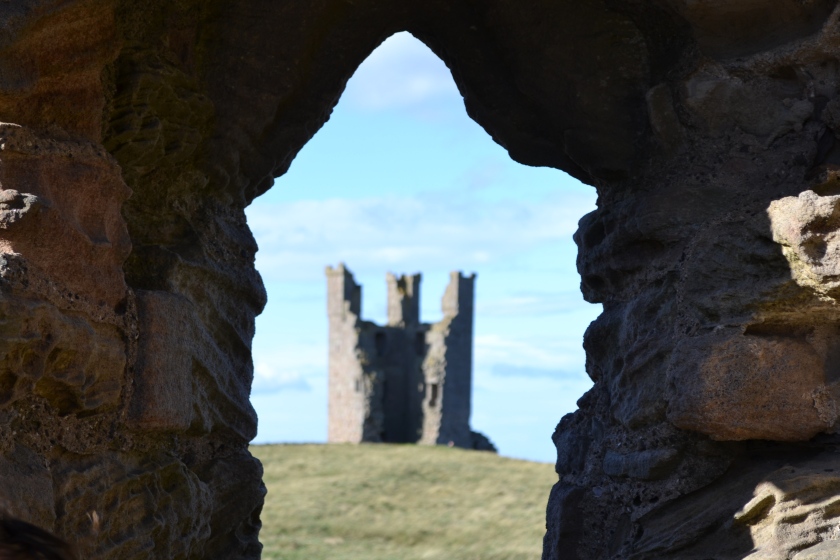
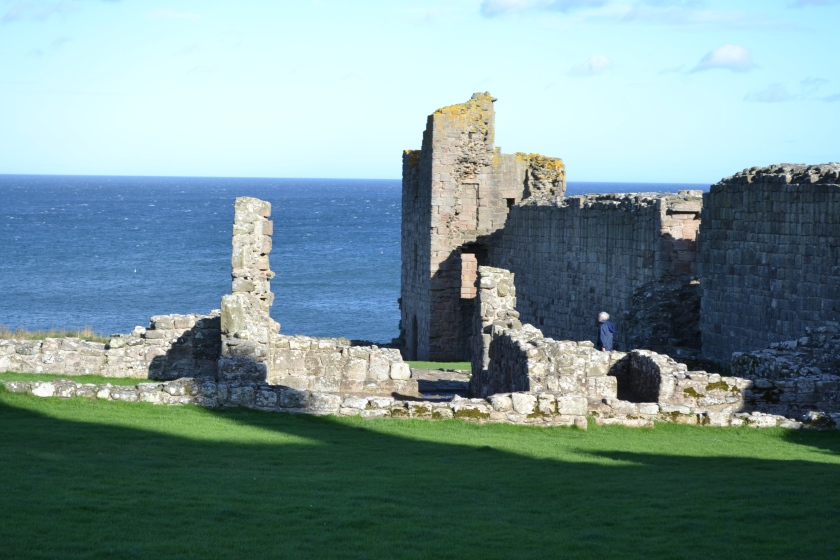
Looking towards Dunstanburgh CastleOne of the towers at Dunstanburgh Castle, NorthumberlandLooking ‘through the keyhole’ at Dunstanburgh Castle!Dunstanburgh Castle, Northumberland
We still weren’t finished with Northumberland. Our remaining days there before we headed into Scotland took in beaches and castles. We headed slightly inland to visit Ford & Etal and we even had a daytrip into Scotland, visiting Eyemouth as well as a couple of hidden coves. We were busy!
We weren’t experiencing wonderful weather; we had some extremely windy conditions – but the sun was out too at times 🙂
From Holy Island we had spotted, what looked like, some rather lovely beaches across the channel, so we headed a couple of miles back down the A1 and took a left. The 1st turn took us to a dead end. We did get out to have a look, but there were bird hides and this wasn’t on the agenda for us so we carried on and took the next left!
After a while we found a lay-by from where we could access the shoreline, so we stopped and headed out for a walk along the shore.
Unfortunately this wasn’t the most pleasant experience as the tide was coming in and we had to negotiate the muddy shoreline around the bay. However we eventually came across the sand which very nearly made the challenging walk to find it worth it! Rather than tackle the shoreline, with the tide even further in, we left the beach via a footpath that took us out to a lane, past a caravan site and finally back to the main road. Although there was no pavement there was room on the verge to walk on when cars went past so it was fine.
Not necessarily my favourite afternoon out, but we did get a fair bit of exercise 🙂
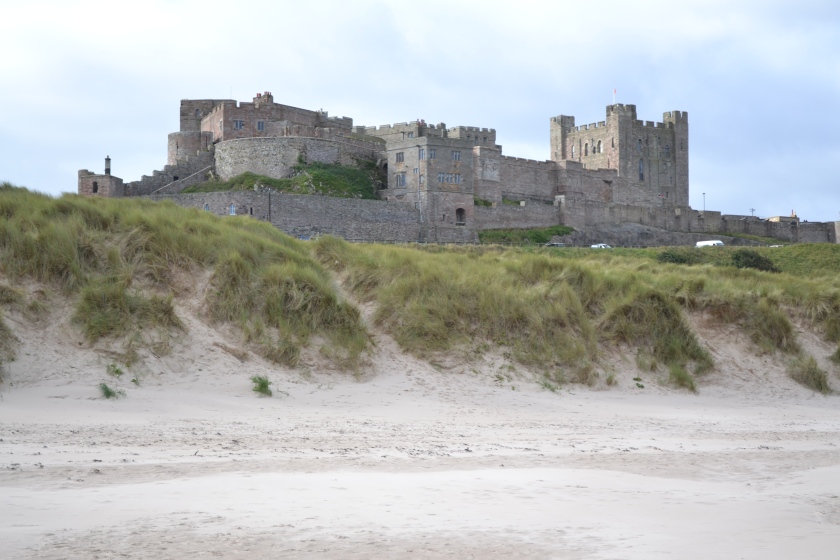
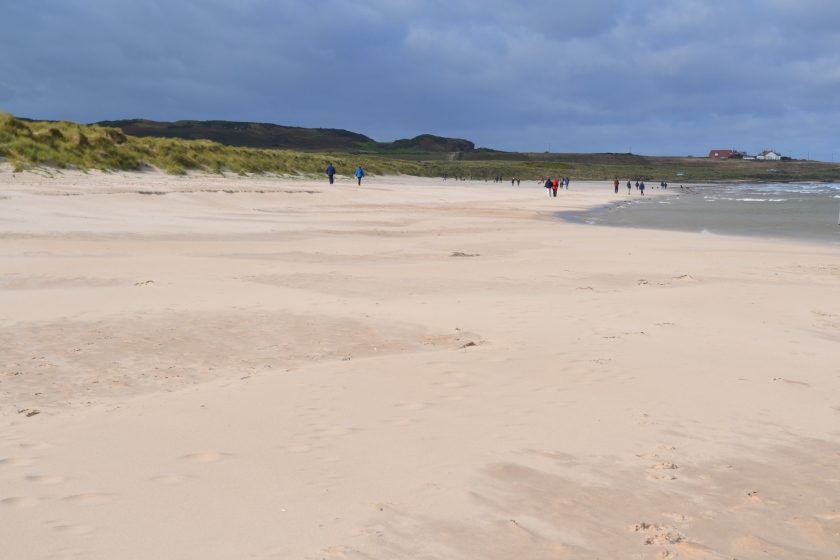
The next day dawned bright and sunny but windy. We had already decided to head down the coast to Bambrugh, which has an amazing stretch of beautiful wide sandy beach backed by dunes you can get lost in! We very nearly did! Continue reading “More Northumberland Beaches. And Castles :)”
After a couple of months home (back living in a house!) and a busy run-up to Christmas, we’re now approaching the end of 2017 and I’m thinking back to our last few weeks on the road. Which means it’s time to tell you all about it!
Also the blog is just 112 views away from 10,000 views! I can’t believe it – thank you so much to everyone who’s ever read any of my ramblings 🙂
So back to the next part of our trip.
Our next stop was still in Northumberland (it’s a huge county), and we had found a small site just a short hop from the causeway that takes you over to Holy Island. There was a site slightly closer, but it was also a lot more expensive!
One of the 1st things we did after arriving was to go down in the car to take a look. There’s a small (very small) parking area just before the causeway so we stopped in here and walked to the edge of the water. The tide was completely in at this point, but you could clearly see where the road went; there was an information board (with sound – you had to wind it up) telling us about the wildlife in the area. There is another board with very clear information on the tide times and when it is safe to cross.
We could also see that there was a walk that would bring us out to this point from the campsite, so decided there and then to use our bikes when we visited the island itself.
We were just a few miles from Berwick upon Tweed, the last town in England, so this was our next stop for the afternoon. The parking was free and we parked in the long stay area in the shadow of the town walls (you needed a disc for the short stay area, but it didn’t cost anything, it was just a way of ensuring the short stay car park didn’t get clogged up)
We were rather taken with Berwick, which was a bit of a surprise (we didn’t know what to expect), but we discovered it’s history of being a true border town and changing hands between Scotland and England 13 times over the course of a few hundred years.
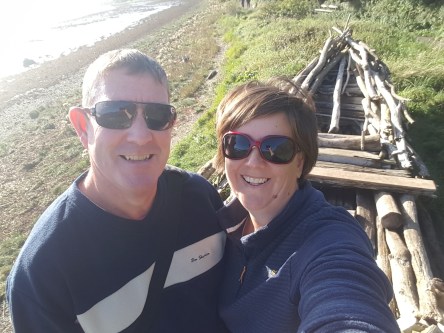
We first headed down through the park to the banks of the River Tweed, where we walked up towards the castle walls (what’s left of them) and then back up through the park into town. We were impressed by the bridges, the remains of the castle walls snaking steeply up the hill and a boat built of wood on the edge of the river bank (where we were joined by a rather boisterous dog 🙂 )
Berwick train bridge
Bridges at Berwick
Berwick Castle
River Tweed at Berwick
On the banks of the Tweed in Berwick in a boat made of twigs
We then took an alley near the car park and found ourselves at the old barracks now run by English Heritage. We had a nice chat with the guy in the ticket office who gave us a little background on the history of the town and then we had a wander around the barracks. Unfortunately this wasn’t one of the better attractions that we visited during the year, but there were a couple of interesting parts. For us there was far too much to read (and that’s coming from me – I love to read!!)
From here we walked along the top of the town walls and when we came down from them we found this delightful little building.
The 1st ladies convenience opened in Berwick on Tweed – now a little sandwich bar 🙂
I was delighted to discovered that it was one of the 1st ladies public loos to be opened. It would appear that it was far easier to build gents conveniences than ladies, so this was quite an event! I seem to remember reading that it’s now a little sandwich bar 🙂
It made my day finding it anyway.
We had pretty much run out of day by this point but, as ever, resolved to return and see the rest of the town – we didn’t of course, just the Asda on the each of town…
The following day was when we were to visit Holy Island (Lindisfarne). We took the cycle path which alternates between on and off road until you get to the parking area, at which point you are on the road ready to cross the causeway. As you get to the centre you have to be careful to stay on the road as you’ll be in the water otherwise! It’s also very windy out in the middle – it was surprisingly hard going, even on our electric bikes!
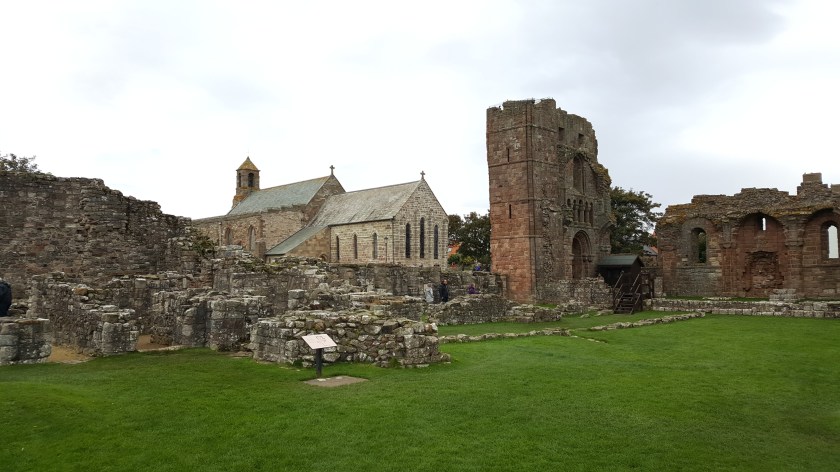
From the site to the village was about 4 miles. Once we had locked the bikes up our first visit was to the priory and the church. (English Heritage). There was very little left of the priory and my abiding memory was of the beautiful pinkish colour of the stone. From here we wandered down to the shore where we found 1 of the 4 lifeboat houses that have served the island over the years.
1 of the Lifeboat stations on Lindisfarne (Holy Island)
Lindisfarne Priory with the church in the background
We could also hear a sort of barking sound which we couldn’t quite place. It turned out to be a number of seals basking on the other side of a small sandbank a little way offshore.
Scrambling up a rocky hillside (there is a path but it’s a longer walk!) we were able to overlook the priory ruins and also climb a tower that has been repurposed to give information about the island, and provide amazing views. Following the path we found ourselves in the natural harbour from where we could see the remains of an old fort. We also noted the upturned boats along the shore that provided shelter and storage. They even had doors built into the end!
Our closest view of Lindisfarne Castle
A new use for an old boat on Lindisfarne
We collected our bikes to cycle down to the castle, which was unfortunately not open as it is undergoing extensive repairs this year. We’ll have to return to see this National Trust property. By now it had started to rain and we were rewarded with a rainbow 🙂 We could see the limekilns across the other side of the peninsula and there was a garden there that you could visit (but that’s not really for us).
On the way back we visited 1 of the 3 pubs in the village, which was part coffee shop and part bar. We picked up some bread in the village shop and then it was back to the van. It was actually very windy by now and so it was head down and go for it… We found it interesting to see groups of people walking across the sands – there seemed to be a waymarked path that they were following. I’m not sure that I’d have been too happy having a go at that on our own though.
We thoroughly enjoyed our day out on the island and, once again, resolved to return to walk amongst the dunes and see the wildlife. Of course, we never quite made it. There was too much else to do!
Of which I will tell you more in my next post. This will include visiting several of the beaches close by (including Bambrugh), a trip inland to Ford and Etal and a short trip into Scotland with a visit to Eyemouth.
Iron Bridge linking the gardens with the house at Cragside
A water wheel at Cragside
The grounds at Cragside
I picked up a leaflet for Cragside and kept it as I thought it looked interesting. Then Calv started talking about an ‘electricity’ house. We eventually determined it was one and the same place (as Cragside was the first house in the world to be powered by hydro-electricity).
Cragside is situated near the village of Rothbury. It’s a huge estate comprising 1000 acres, 5 lakes (created by William Armstrong to help create the hydro-electricity to power the house). There are 14 waymarked walks (both long, short and interchangeable), a boathouse, ‘trim trail’ and a circular drive around the whole estate (with several car parks to stop off in and pick up 1 of the trails).
With so much to do it’s not cheap (£18.80 for the house and estate) although it is cheaper from the beginning of November until 18th December) and, trust me, it IS worth it 🙂 Continue reading “Cragside – an exceptional estate”
Moving back to the coast we found ourselves staying near Ashington, just east of Morpeth. This is colliery country, a heritage which is clear everywhere with reminders often in the form of sculptures in towns and on roundabouts.
On our first day we headed down the coast towards Tynemouth. Unfortunately the fog was relentless and would not budge all day on the coast! We could barely see anything, not even the sea when we were standing on the end of the jetty at Cullercoats!
We did try though, getting out and having a wander; up close we could see that the beach was sandy, but the resort was perhaps a little more tired than in it’s heyday when numerous artists frequented it, often to paint the fishermen and their wives.
From here we headed north to see if the fog would have lifted by the time we got to St Marys Lighthouse. It hadn’t! At which point we gave in and headed back to the van, where the sun was out… We were told that this wasn’t unusual for the area.
The next day we visited Cragside (for which I have done a separate post as it merits it).
So I’ll pick up with our last day here which saw us head to the nearest seaside resort to us and venture a little further north up the coast to Amble.
Our neighbours at the site actually came from Newbiggin on Sea, just about 5 miles from where we were staying. So this is where we started. And what a pleasant surprise it was. We ended up spending a good hour or so wandering around the bay, which was a lovely sweep of sand. Out in the bay is an offshore sculpture, ‘The Couple’, which is either loved or hated it would appear. I quite liked it! There is also a smaller version on the promenade.
There’s quite a lot of interest here, including the fact that the 1st kayak team to circumnavigate Great Britain, Land on the Left, left from here, and returned to here, in 2012.
Whilst the promenade along the bay is lovely the town itself isn’t quite so much. A little tired perhaps.
This slideshow requires JavaScript.
We continued along the coast to Amble, stopping on the way at Druridge Country Park. This consists of a large lake, meadows and woods as well as the star of the show, the sweeping bay of golden sand. There is, of course, a café but it’s only open at weekends outside of the school holidays. The main car-park is free and it is an easy walk down to the spectacular beach.
This slideshow requires JavaScript.
As the sun was still shining we continued on towards Amble, which turned out to have a certain charm (and free parking..!) We went south of the harbour first (where all the holiday parks are located) before heading back up into town.
We made our way to the harbour, where we could hear the rich dialect of the area. I often would hear someone talking, and it would take several seconds before I realised that they were actually speaking English! (I have always had trouble understanding the wonderful Geordie accent – I love it, but my brain takes it’s own sweet time to register exactly what is being said!)
We stopped at Spurreli’s Ice Cream Parlour, voted the UK’s best in 2014. And it was very nice – although unfortunately the more elaborate sundaes were very pricey! Then a wander including taking in the 2 war memorials of the town; it’s own Clock Tower and the memorial from neighbouring town of Radcliffe which was demolished in the 1970s. Read more about this lost settlement here.
This slideshow requires JavaScript.
All in all a lovely last day in Southern Northumberland before we moved up to stay near Holy Island, where we visited Berwick on Tweed, Ford & Etal and Bambrugh as well as making a brief foray into Scotland to visit Eyemouth 🙂
Before I catch up with posts for the last month or so of our travels I have to re-iterate how we often miss out on what’s right on our doorstep.
We are going to try to make sure we put this right over the coming months (whilst we’re at home), and we started last week when our fellow campers, Steve and Denise, stopped with us in Nutbourne before heading off to Spain for the winter (just a bit jealous..)
Anyway, we decided to take them to Portsmouth on the Monday, well Southsea. We drove in from the Eastney end so they got the full view of the sea – all the way from Farlington Marshes and down the Eastern Road. It’s an aspect of Portsmouth that I believe is sadly neglected, unless you happen to live up that end of course!
We passed the old military barracks – now residential but housing the Royal Marines Museum as well, the beach huts, canoe lake, the putting green (and the Tenth Hole where we intended to eat cake, but sadly ran out of time) and the model village.
Moving on we passed the bowling green, D-Day museum (which seems to be in the process of being refurbished), the Pyramids centre (swimming and nightlife) and, of course, Southsea Castle (free to visit from March to October), the castle field and the bandstand. This is such an amazing area and holds so many fantastic memories for me. I used to take my boys to the castle regularly (as well as Fort Nelson ‘up on the hill’).
Castle Field stretches my memory further back in time to when Radio 1 Roadshows were all the rage,
So I’ve been very lax lately in keeping the blog up-to-date – I’m sorry!
We are actually home now, and have been for a whole week. We did stay in the van for a few days, but moved into the house last Thursday. We’re slowly getting everything together – we actually managed to finish emptying the storage unit this afternoon (after about 10 trips using a Golf estate and the little white car towing the little trailer!)
Anyway the reason for this post is just to let you know that I will be posting about the last month or so of our adventure as soon as I can, but at the moment it’s all a bit hectic.
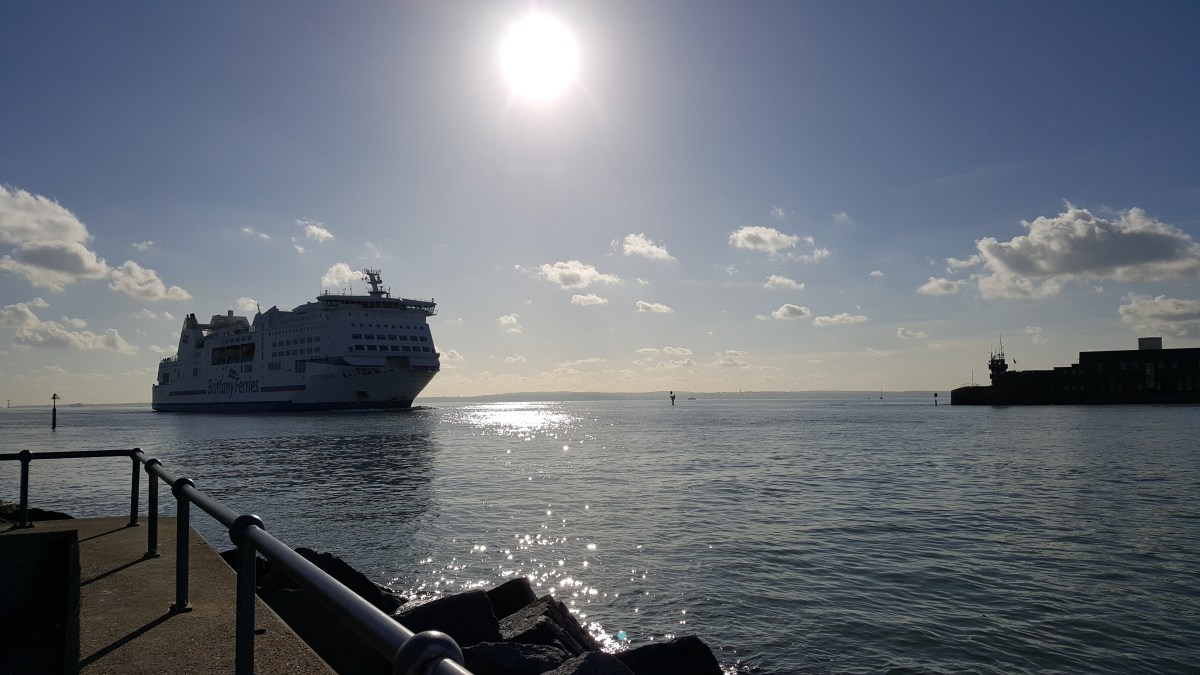
People keep asking how it feels to be back in a house after 9 1/2 months on the road. Surprisingly I just feel very relaxed about it (although I didn’t on our 1st afternoon back when we went to the house and realised just how much work we have ahead of us!) Calv is a little less relaxed than me – he keeps saying to me ‘Let’s just get on a ferry and go..!’
What I have left to tell you about includes the north coast of Northumbria, Holy Island, straying into Scotland, a few days in the lakes, a short trip to Blackpool and a quick return to the Dales (to see Malham Cove and the limestone pavement).
I’ll also put together posts on our favourite spots to visit, best beaches etc. and finish off my campsite reviews. Hopefully by the time I’ve finished these we’ll be off again. The aim is to return to Scotland to explore the Highlands and Islands around April time.
First off, my apologies for most of the photos appearing here at the start – I’m having a spot of bother again getting them where I want them!
This slideshow requires JavaScript.
This slideshow requires JavaScript.
This slideshow requires JavaScript.
Apart from visiting Hadrian’s Wall sites when in inland Northumberland we also went a little further afield, visiting the Angel of the North, Beamish Museum and a Sunday afternoon in Newcastle.
Beamish museum was somewhere that I was aware of and keen to visit. I love ‘living’ museums like this where the exhibits represent how we used to live, often with buildings saved from different areas and rebuilt in the museum. Similar museums around the country include the Weald and Downland near Chichester, St Fagans Folk Museum in Cardiff, Blists Hill Victorian Town near Telford and the Black Country Museum in Dudley. I have been to each of these museums (except the Black Country Museum) at least twice, and as a result often shout excitedly at the telly when I see a location I recognise (as they’re often used for filming!)
We actually visited Beamish twice. There were 2 reasons for this, the 1st being that they are one of these, really pretty annoying, attractions where your entry fee allows you to visit for a full year. This is all very well if you live in the area and are likely to visit more than once – but how about a cheaper price for those of us who are just visiting? We missed out on Leeds Castle because of this policy (and saw many others turning round and leaving), and need to visit Chatham Docks again before May in order to use our tickets again before they run out…
Anyway, the main reason we had to return was that a couple of days after our first visit there was a big classic car show being held. So that was reason enough to go back….
Beamish is a living history museum located in the village of Beamish, near to Consett. There is an awful lot of walking available as you make your way around the site, between the pit village (and a quick tour down a real pit shaft – not far but very interesting), the town, the hall and the farm.
Entrance to the pit at Beamish
On the way down the pit
Where the miners worked (only without the light…)
The Pit Village at Beamish
Don’t despair however there are plenty of transport options; old trams and buses run frequently and there is no extra charge for these. There are several houses that have been rebuilt and dressed in the style of the day, both in the pit village, the town and also the hall. Don’t miss the tower as you exit the hall – this is the most interesting part of the building!
Over the 2 visits that we made we managed to see every part of the museum and were suitably impressed (at £19 each though that’s a good thing!)
On the way to the museum we had visited the Angel of the North , the iconic sculpture designed by Anthony Gormley which you cannot miss as you drive by! There is free parking and an information board at the bottom of the hill that the angel is sited on, and she is really an awesome sight!
We returned to the van via Consett as we needed to get fuel.
After our 2nd visit on the Sunday we headed in to Newcastle to have a look. We ended up having some lunch – I found out that Weatherspoons now operate a system where you’re able to order online, including your drinks! Brilliant! (However, I also think this is old news, just like when I got all excited about the automatic ordering in McDonalds…)
After lunch we headed off to have a look around Newcastle. I’m not sure how far we walked, but it was a far way. We were impressed with the city – it wasn’t what we were expecting at all. Added to the grand old buildings there was a definite vibe about the place even on a Sunday afternoon in September.
Finally in this area, on the Saturday between these 2 visits to the museum we decided to have a lazy day but ended up heading out for a drive, visiting Heddon on the Wall and then Prudhoe Castle. We also found where the British Masters was being held (we’d seen signs for parking as we’d been driving around the area for the previous week) at Close House, which was busy preparing for the tournament that was being held the following week.
Prudhoe Castle is an English Heritage property, but whilst a pleasant enough way to spend, maybe, half an hour, it wasn’t one of the better properties we’d visited. Put it this way, it’s one of the properties that we would have been fed up to have paid out £12 between us if we hadn’t been members…. However, if you do go make sure to visit the room above the gatehouse 🙂
So our time in Hadrian’s Wall country came to an end, but not our time in Northumberland. We had 11 more nights and 2 more sites on the coast to visit before moving on to Scotland!
After the North York Moors we headed back inland to take a look at Hadrian’s Wall in Northumberland.
By pure chance we stayed on a campsite, a few miles north of Corbridge and Hexham, that was right on the route of the wall – unfortunately there weren’t any sections of wall here, but it did mean that we weren’t too far from any of the main sights. For us these were: Corbridge Roman Town, Chesters Bridge & Chesters Roman Fort, Housesteads Roman Fort and Heddon on the Wall.
Our first full day saw us visiting Corbridge Roman Town and also Hexham. Corbridge itself is a very pretty little town which we drove through to find the old Roman town. This is an English Heritage site (as many of them are along Hadrian’s Wall) and we were really surprised by just how engaging our visit was.
The 1st item of interest that you come to is a Roman road that you can actually still walk along – the bit that is left is believed to be from the 3rd century AD. We had audio guides and along with the plentiful information boards this kept our interest all the way around the attraction.
Corbridge Roman Town
Corbridge Roman Town
Before heading back to the van we headed to Hexham for a little look around. As usual we parked a little way out and walked back into town, where we were able to visit the abbey (free to enter), which was very interesting, but there was clearly an event being held that evening (and we were there quite late in the day). This meant that we weren’t able to visit the crypt which seemed to be a very interesting area.
There is also a moot hall and an old gaol to visit, but we were too late for either! The town is definitely worth a visit though, and not just for the fact that this is where you’ll find several supermarkets and takeaway options.
Hexham Abbey
Hexham Moot Hall
Hexham Old Gaol
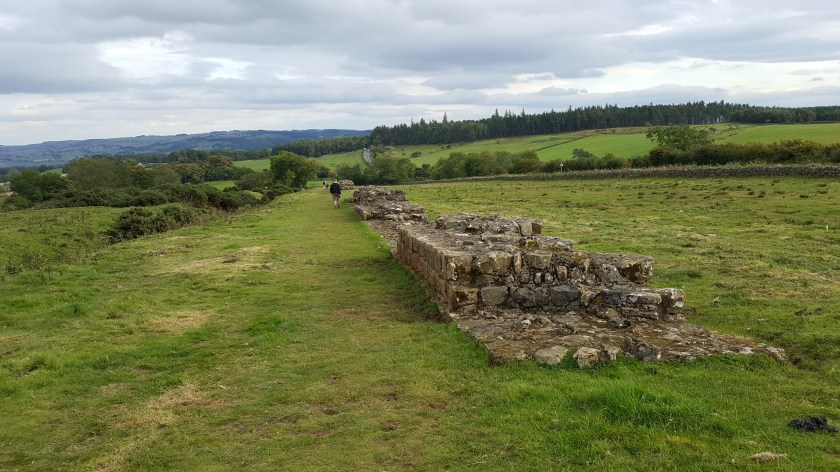
The following day we headed in the opposite direction and found Chesters; 1st the Roman bridge remains (at the end of a 3/4 mile long footpath). It’s amazing to see how much is actually left and we could also see across the river to Chesters Roman Fort which is where the bridge led to.
So this was our next stop. Again an English Heritage site with lots of information available. Many of the Roman remains that we are able to see today in the area were saved due to the actions of 1 man, John Clayton, who inherited the land from his father and started excavations. He also bought up neighbouring estates when they became available in order to save the ruins from being lost completely.
In the grounds of Chesters there is a museum, built by his son, that houses many of the objects that he excavated over the years. We visited both at the beginning and end of our visit!
The stand out attraction on this site is the remains of the bath house which are quite extensive. We were also able to look back over the river towards the bridge remains.
Chesters Roman Bridge
Chesters Roman Bridge with added ‘sculpture’. Apparently these were common and were believed to bring luck!
Barrack remains at Chesters Roman Fort
Bathhouse remains at Chesters Roman Fort
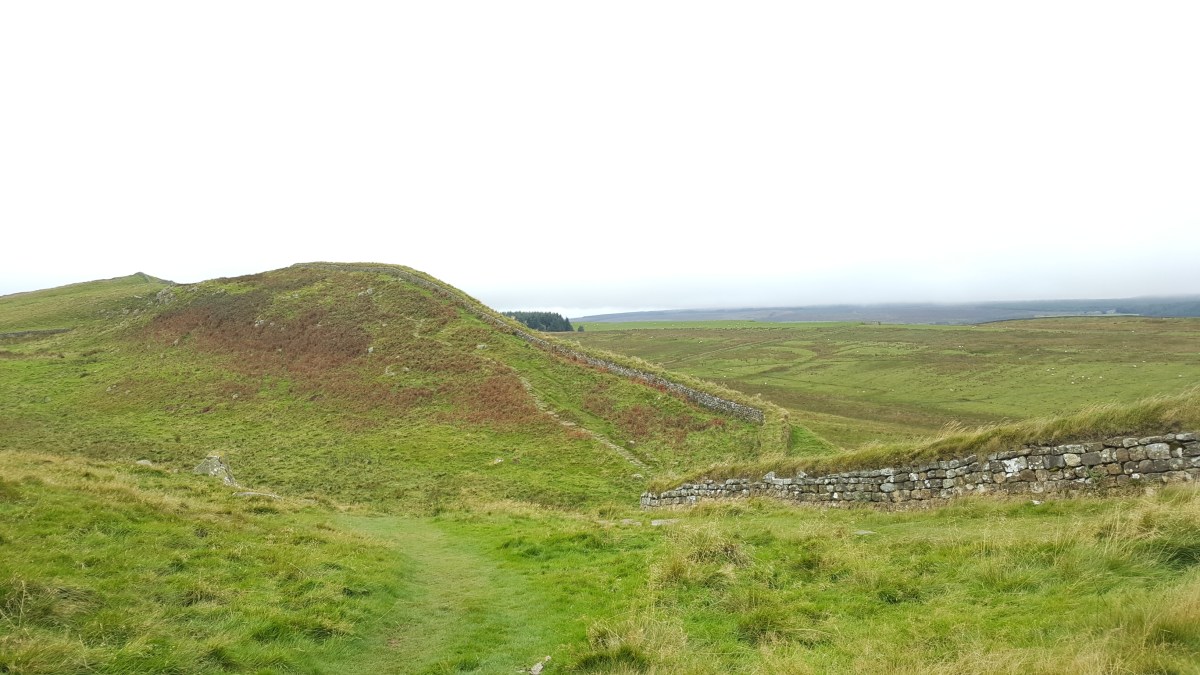
We still hadn’t seen any of the actual wall so we carried on along the road and after a short while we caught our 1st glimpse. We parked up by the side of the road as soon as we were able and walked back along the Hadrian’s Wall path to see the wall.
The following day we continued further along the same road to visit Housesteads Fort. Once again we drove into and back out of the official car park (as it was run by the park authorities rather than English Heritage. NB: Corbridge Roman Town and Chesters car parks are run by English Heritage so these charges don’t apply). They were charging £3 to park regardless of how long you were staying.
The lady at Corbridge Roman Town suggested that we parked a couple of miles away at Steel Riggs where she said the parking was cheaper – we looked but it was actually £4 there! So we found a layby about a mile along the road from the fort and walked from there.
We made it difficult for ourselves, heading up the hill to join the main path (it wasn’t easy walking!) and when I saw 1 of the bulls at their feeding station staring us down I insisted on retracing our steps and going a slightly longer way around! We came across a structure at the top of the hill that was probably a part of the wall (there were milecastles along the route, and smaller watchtowers) which we explored a little.
On the way to the fort we came across a short section of the wall that is actually part of the path (much of the actual wall is off limits to walk on), and shortly after this section you get to the fort itself. This fort’s main attraction is the remains of the latrines where the flush system still works when it rains hard! We were expecting to be getting bored of the Roman remains by this point, but it actually wasn’t the case – each of the sites has a different reason to visit.
We found a quicker way back to the car by following the tarmac road past the education centre (so no encounters with bulls this time 🙂 ).
Next stop was the town of Haltwhistle, apparently the centre of Britain. There were a couple of points of interest, but unfortunately not an awful lot was made of these and overall the place was a little depressing.
Before returning back to the van we went off route and found a couple more sections of wall (and also more car parks where daft amounts were being asked to park – they were empty…)
At 1 section I was a little behind Calv in coming back down the hill, and spotted a cow keeping it’s beady eye on me (you have to be careful when they have calves with them). I had to move fairly fast to get to the gate before the cow got to me!!
We also spotted ‘The Tree’ from Robin Hood, Prince of Thieves!
We also saw another section of the wall at Heddon on the Wall; just a small section though and probably only worth seeking out if you’re actually heading that way.
In my next post I will tell you about the other things we did while staying here: Beamish Museum, the Angel of the North and Prudhoe Castle.














 turnrightoutofportsmouth